Concise is an online and in-person corporate event management company.
I was headhunted by The Concise Group in 2023 where I had previously interviewed, but pulled out of the process when my circumstances had changed. The then-CEO contacted me a year later to see if I was interested in a new role.
I took up the position as a Senior UX designer, my role was to research and develop new products and to help with their existing offering. One of the first challenges was the lack of continuity across the existing product.
The Problem: Lack of continuity in the functionality and in the design across the existing product range. Additionally we had to be able to quickly customise the ‘White label’ designs for clients branding and requirements.
The Solution: We invested in a new design system called Figma. I taught my other colleagues how to use and create components in Figma. I planned the library and lead on creating component. This was a side project which took months to develop.
The Outcome: All new designs use the libraries resulting in page consistency and continuity. The developers are now creating a library to reference in their code instead of copy/paste code which leads to errors. Creating mockups for the client has been cut down from 3 hours to 1 hour, when we introduced the use of Tokens it allowed for colour manipulations of individual components and where necessary a part of a component. The company, develops and designers are all happy with the result and in working with Figma.
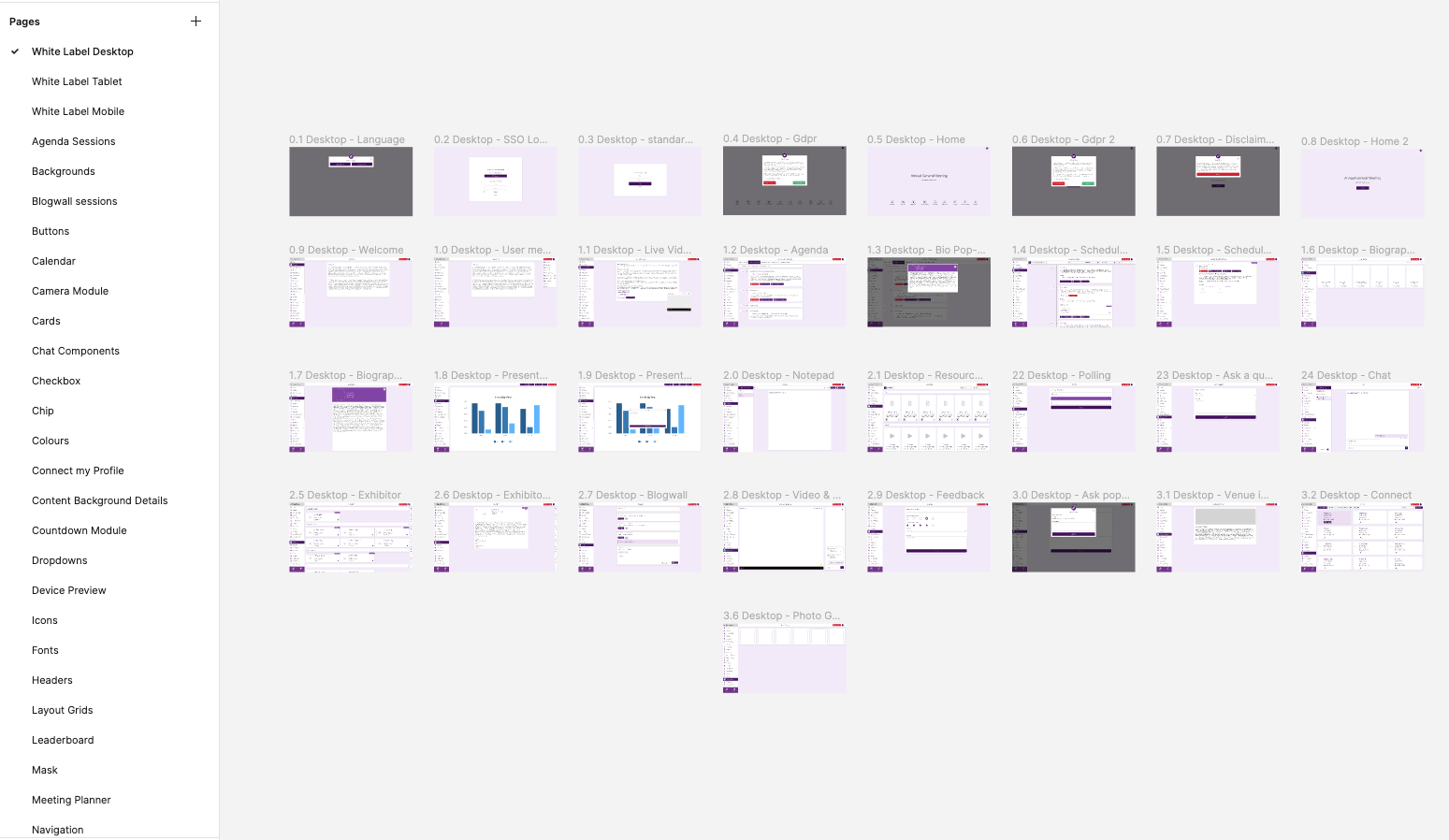
Below is a screenshot taken from the Figma component library showing some component pages and the app desktop pages made entirely using the design library.
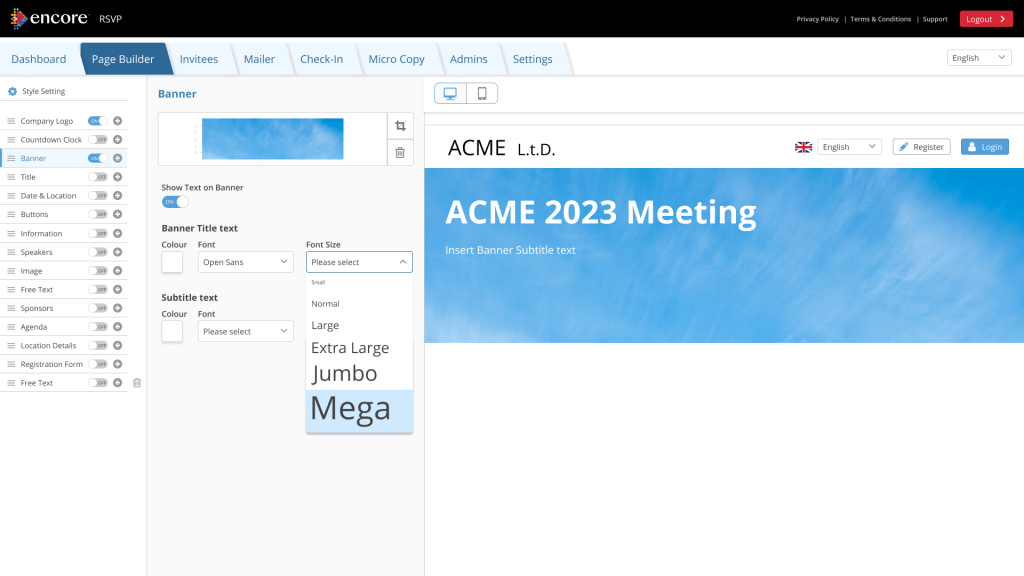
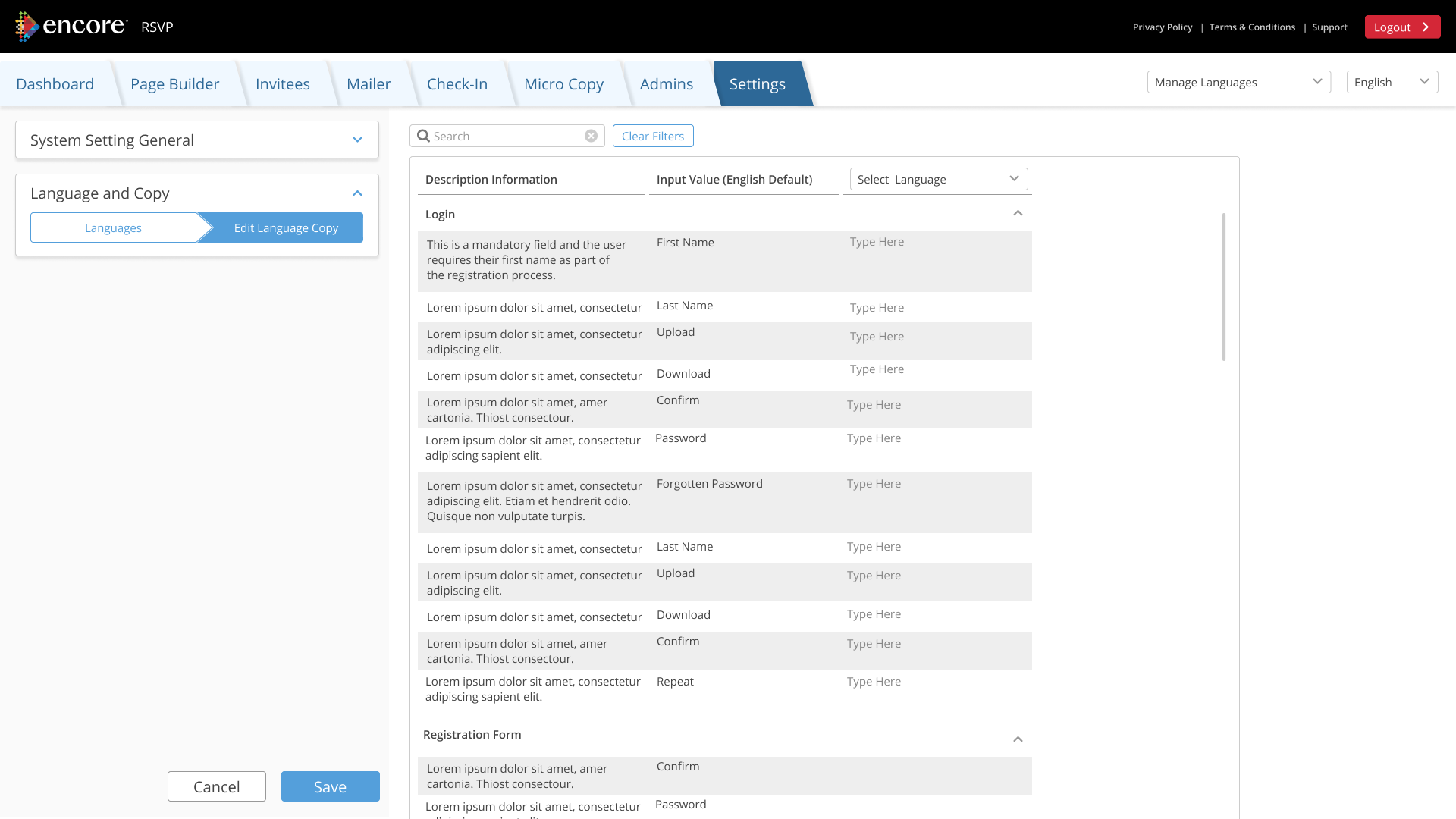
The company wanted to create a new self-serve application, which would provide all the tools necessary in one app to self-manage the event. The application would allow companies to: create and build their event this included
- To allow the client to create their event website through a simple interface
- Generate and deploy several different types of email
- Create an itinerary for the event
- Create Speaker biographies
- Timetables
- Specifying which auditorium a talk was being held in.
The Problem: Although this was a green field project, and I did not inherit any existing issues. The time scale the company wanted the project to be developed in, did present a few challenges. Although there was some time for research it was limited and I had to make the best use of time. I used the existing product as a benchmark and asked the PM team what they liked and didn’t like about the product and how they thought it would be better to interact with it. While I was doing this, I designed some high level design clickthroughs and tested taking into account the feedback I had already had. The work was completed in a few weeks giving us a good us a good direction.
The Solution: We did not have the time to develop some of the functionality that came out of the research and so we had to use 3rd party components to integrate into the product. We tried to remain as faithful to my original design as we could, but limitations of third party software forced us to adapt the design.
The Outcome: I tested the completed product on a sample of respondents who were specialist in the events management field but were not technical and would have relied on companies like ourself to generate the events documentation. The tests performed well and every respondent finished the tasks without many issues.


Another greenfield project I worked on was ‘Virtual Lobby’, designed to help people navigate events by clicking on a section of an image on their tablet or mobile that would give them information, directions, pdf’s, and locations of talks at the event. I designed the end user interface and the functionality for the creator of the Virtual Lobby.


 Mike Green Portfolio